
Balance Bike vs Pedal Bike: Which Is Better for Your Child?
A child can be perfectly happy running around the park and still freeze the moment you ask them to pedal a bicycle. That does not necessarily mean they are afraid of riding. Balancing, steering, pedalling and braking are four different jobs, and learning them all at once is a lot to ask.
This is where the choice between a balance bike and a pedal bike matters. A balance bike lets a young rider concentrate on staying upright and controlling direction. A pedal bike adds the satisfying challenge of moving forward under their own power. Neither is automatically better for every child. The right starting point depends on what they can already do, how confidently they move, and — more importantly than a birthday — how well the bike fits.
Two bikes, two different lessons
A balance bike has two wheels, a saddle and handlebars, but no pedals. The child pushes along with their feet, takes longer strides as confidence grows, and eventually lifts both feet to glide. Steering and balance develop together, with the ground always within easy reach.
A pedal bike has a drivetrain that turns the rear wheel. Now the rider has to coordinate pedalling with steering and balance, as well as learn to stop with the bike's brakes. That is a welcome next step when the balancing part already feels familiar. It can be frustrating when everything is new at once.
The distinction is not theoretical. A child who can glide for several metres on a balance bike is already doing much of what keeps a pedal bike upright. The next task is learning how to start, pedal and brake without losing that balance. Cycling instructors often teach children in this order for precisely that reason.
Why a balance bike is often the easier first step
Imagine teaching a child to swim while also asking them to memorise a new sequence of arm and leg movements. Separating the skills makes the lesson less overwhelming. Balance bikes work on a similar principle.
On a properly sized balance bike, the child can plant both feet flat on the ground while sitting. They can stop, restart and experiment at their own pace. There is no need for a parent to run alongside holding the saddle. The child learns that a slight lean and a small handlebar correction are normal parts of riding, not reasons to panic.
Weight matters here. A bike that a parent barely notices lifting may feel cumbersome to a two-year-old. The woom Original 1 in ElectraBike's catalogue has 12-inch wheels and a listed weight of 3 kg. Its low frame, adjustable saddle and child-sized brake lever make sense for a young rider practising balance and stopping. The listed rider-height range is 82–100 cm; that matters more than the approximate age suggested on the page.
For a different feel, the Early Rider Charger 12 uses a 6061 aluminium frame, 12-inch wheels with 2.0-inch tyres, and a low minimum saddle height of 31 cm. It is another option worth fitting in person, particularly if the child enjoys moving across varied, firm surfaces. Its low saddle is useful only if the child can still sit comfortably and reach the ground.
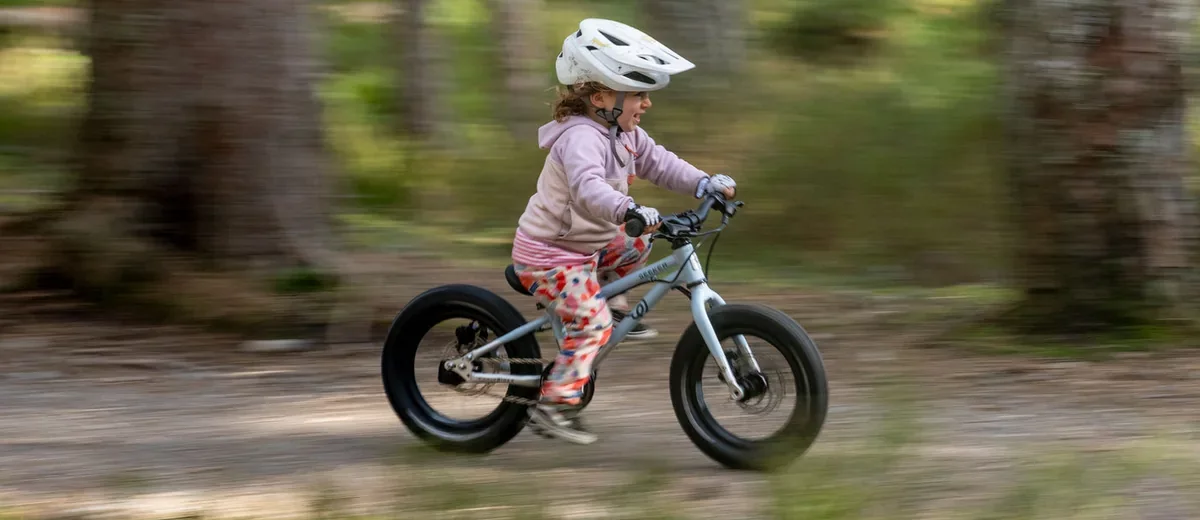
When going straight to pedals makes sense
Some children already have good balance from scooters, play and other activities. Others have spent months confidently gliding on a balance bike and are ready to move on. In these cases, buying another balance bike just because of their age may delay the more interesting step.
A correctly fitted lightweight pedal bike can be a sensible first purchase for an older beginner, too. If pedalling and balancing together proves difficult, a parent can sometimes temporarily remove the pedals, lower the saddle and use the bicycle as a balance trainer — provided the bike is suitable for that setup and has an appropriate working braking arrangement. Ask a bicycle mechanic to check before doing this.
The woom GO 2 is a practical example of a first pedal bike. It has 14-inch wheels, an aluminium frame, child-oriented hand brakes and a listed weight of 5 kg. The catalogue gives a rider-height range of 95–110 cm. Its low entry and adjustable fit are particularly useful during the awkward first starts and stops.
A growing rider may instead fit a Spinn Pixie 16, an aluminium-framed pedal bicycle with 16-inch wheels. The cited model is listed for riders approximately 91–117 cm tall. Notice the overlap with the woom GO 2: wheel diameter alone does not tell you which bicycle fits better. Frame geometry, saddle height, reach and the child's actual proportions all matter.
A practical comparison from the ElectraBike range
| Model | Type | What the catalogue confirms | Best reason to consider it |
|---|---|---|---|
| woom Original 1 | Balance, 12-inch | 3 kg; rider height 82–100 cm; adjustable saddle | A very light first balance bike for a smaller rider |
| Early Rider Charger 12 | Balance, 12-inch | Aluminium frame; minimum saddle height 31 cm | A low balance bike with wide tyres |
| woom GO 2 | Pedal, 14-inch | 5 kg; rider height 95–110 cm; hand brakes | Moving from gliding to independent pedalling |
| Spinn Pixie 16 | Pedal, 16-inch | Aluminium frame; rider height 91–117 cm | A first or next pedal bike if the fit is right |
These are not four rungs on a fixed ladder. A tall, confident beginner may be ready for a pedal bike while a smaller child of the same age still benefits from a balance bike.

The fit test that matters more than the age label
Before looking at colours or wheel sizes, watch your child sit on the bicycle. On a balance bike, both feet should rest comfortably on the ground with a slight bend in the knees. They should be able to push forward without stretching for each step.
On a first pedal bike, check that the child can mount and dismount without being lifted, reach the handlebars without locking their elbows, and operate the brakes with their hands. A first-time rider often benefits from a lower saddle during learning; it can be adjusted as their confidence and technique improve. Do not compromise a safe riding position merely to buy a bicycle they might grow into next year.
Have the child try an easy turn and a controlled stop. A bike can look perfectly sized in a product photograph and feel entirely wrong once a child tries to move it.
Where to practise in Dubai
For the first sessions, choose a quiet, flat, traffic-free paved area with room to turn and stop. Avoid busy shared paths, steep ramps, loose sand and the temptation to start with a long family ride. Children learn better through short, enjoyable attempts than through a tiring lesson with an audience.
Dubai's climate also changes the plan. Choose cooler hours, bring water, and check that the ground and bike components are not excessively hot. A properly fitted helmet and closed-toe shoes belong to every session, including the early balance-bike stage.
Start with a simple game: push towards a visible point, stop, turn around, and come back. Later, ask the child to glide between two markers. When they can balance, steer and stop without constant help, pedals become a natural next challenge.
What about training wheels?
Training wheels can help a child become familiar with pedalling, but they support the bike rather than teaching the same leaning and balancing skills as two-wheel gliding. They are not inherently wrong; for some families they are a comfortable starting point. If the goal is independent two-wheel riding, however, balancing practice still needs to happen sooner or later.
A parent should not treat the choice as a race. Progress can be quick, slow or uneven. The useful milestone is not the child's age when the training wheels come off, but whether they can start, steer, stop and enjoy the ride independently.
So which one should you buy?
Choose a balance bike when your child is still learning how a bicycle moves beneath them, needs easy ground contact, or feels overwhelmed by pedals. Choose a pedal bike when they already glide confidently, show interest in pedalling, and can safely reach the controls on a correctly sized model.
Explore balance bikes and kids' pedal bikes at ElectraBike, or arrange a size check and test ride in Dubai. Ten minutes watching your child handle the bicycle can tell you more than any age chart.


